
Optimizing Space and Cost in Automotive Parts Transport
- Insights
- Austria, Bahrain, Bulgaria, Denmark, Germany, Hungary, Kuwait, Moldova, Oman, Poland, Romania, Saudi Arabia, South Africa, United Arab Emirates
- Automotive
- Industry solutions
In automotive logistics, every cubic meter and kilogram saved in transport translates to cost savings. That’s why packaging optimization is a critical lever for efficiency. One strategy is using collapsible or nestable packaging to reduce volume on return trips. After delivering parts, an empty container that can fold down or nest inside another will take up far less space in the truck coming back. Common examples include gitterboxes, and pallet collars (as mentioned earlier) that can be flattened. By implementing collapsible packaging, automotive suppliers cut down on “air” being shipped – this can reduce return freight costs significantly, especially in global supply loops where bringing back empty containers is a major expense.
Maximizing Parts Per Pallet and Truckload
Another key approach is maximizing parts per pallet and per truckload. Packaging engineers work closely with automotive clients to design the container or pallet layout that packs the highest number of parts without damage. This often involves custom sizing or clever interior dunnage. For example, if a part is irregularly shaped, instead of shipping one part per box with a lot of empty space, we might create a custom rack that holds multiple units in a secure, Tetris-like arrangement. A real-world illustration of the impact: Nissan’s packaging team managed to increase the standard number of a certain part per rack and achieved over 50% better trailer utilization, slashing the required number of truck loads by half. They did this by reconfiguring how parts were layered and supported, demonstrating how smart packaging design can dramatically cut transport costs.
Similarly, PalletBiz helped a client re-engineer an export crate to fit an exact container width; by slightly altering dimensions, we enabled an extra row of crates per shipping container, saving the client several shipments per year.


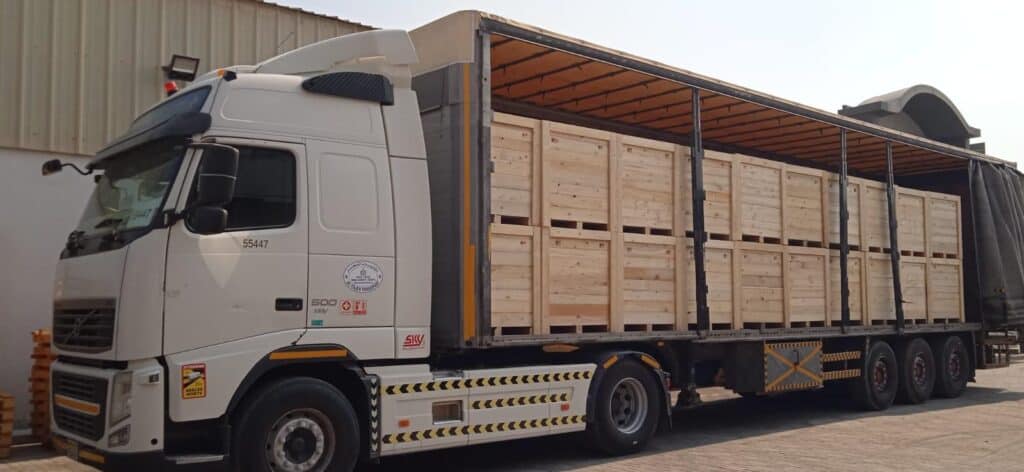
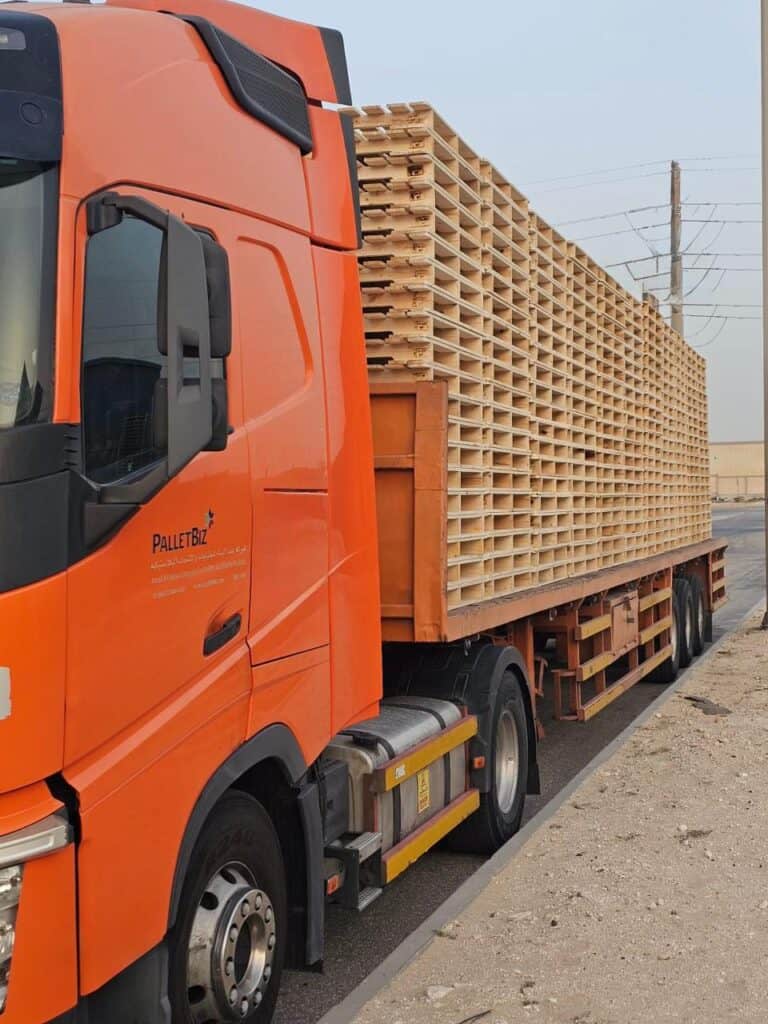

The Importance of Stacking Efficiency and Package Weight
Stacking efficiency is also crucial. Automotive parts packaging is often stacked high in warehouses and trailers. If packaging isn’t strong enough to stack, it wastes vertical space. By using materials like high-strength corrugated board or adding reinforcements to boxes, we enable taller stacking without crushing. Optimized stacking and standardized unit sizes can boost warehouse storage density and allow fuller loads – a point underscored by industry research which notes that packaging must support space efficiency and optimized stacking, alongside protection.
Another sometimes overlooked factor is the weight of packaging. Heavy packaging eats into the payload limit of a truck. Wherever possible, using lighter materials (for instance, switching from a wood crate to a heavy-duty corrugated crate for lighter parts) can reduce shipping weight. Even a few kilograms saved per package add up when thousands of parts are shipped.
PalletBiz: Your Partner in Packaging Optimization
PalletBiz’s expertise in this domain means we not only provide packaging, but also consultancy on how to streamline your packing and transport. We conduct packaging audits that identify under-utilized trailer space or overly heavy materials and suggest fixes.
For example, if a client is shipping small components in half-filled cartons, we might propose a switch to modular packing – smaller cartons that neatly fit in a larger outer carton or on a pallet with minimal void space. If another client is spending too much on return logistics, we introduce them to a collapsible container solution from our portfolio. The result of these optimizations is two-fold: lower logistics costs and a smaller environmental footprint. Fewer trucks on the road and fewer materials wasted is a win-win. In the automotive world where margins can be tight and sustainability is scrutinized, such packaging optimizations provide a competitive edge. PalletBiz takes pride in helping clients load smarter, stack higher, and ship more efficiently than ever before.
Related publication
Packaging Irregular Aerostructures for Military Transport Aircraft: A Custom Wooden Crating Case Study
September 23, 2026
- Insights
- Austria, Bahrain, Bulgaria, Denmark, Germany, Hungary, Kuwait, Moldova, Oman, Poland, Romania, Saudi Arabia, South Africa, United Arab Emirates
- Defence
- Industry solutions

PPWR: what it means for your packaging supply chain
September 3, 2026
- Insights
- Austria, Bulgaria, Denmark, Germany, Hungary, Poland, Romania
- Business, Industry solutions, Sustainability
Would you like to know more details?
Fill in the form or ask the chatbot to establish the contact with us



 English
 Germany
 Hungary
 Poland
 Romania