
Solving the Atypical Dimensions Problem in HVAC Packaging
- Insights
- Austria, Bahrain, Bulgaria, Denmark, Germany, Hungary, Kuwait, Moldova, Oman, Poland, Romania, Saudi Arabia, South Africa, United Arab Emirates
- Heating & Ventilation (HVAC)
- Collapsible packaging, Industry solutions, Packaging accessories, Wooden pallets
When Your Product Don't Fit the Standard
Most packaging infrastructure is built around standard dimensions. EPAL pallets. Standard collar sizes. Common lid formats. These standards exist because they reduce cost, simplify logistics, and make interoperability easier across supply chains.
But HVAC products don’t always cooperate.
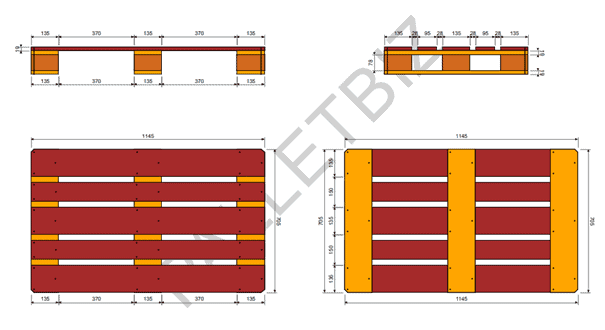
Heat pumps, expansion vessels, control cabinets, and module assemblies frequently arrive in sizes that fall outside standard packaging formats. Not dramatically outside – often just enough to make standard solutions unworkable. A pallet 50mm too wide. A collar that doesn’t close cleanly. A lid that leaves a gap.
These are not major engineering problems. But they are persistent operational ones. And if your packaging supplier cannot accommodate them, you are either forcing your product into a format it doesn’t fit, or managing the cost and delay of bespoke solutions sourced from multiple vendors.
The Kit Solution Approach
One of the most effective answers to the atypical dimensions problem is the kit solution: a matched set of pallet, collapsible collar, and lid, manufactured to consistent non-standard dimensions and supplied as a coordinated unit.
This approach is particularly well-suited to HVAC products that require vertical stacking protection, dust shielding during storage, or containment during multi-leg transport. The collar creates a defined enclosure around the product without requiring rigid crating. The lid seals the top. The pallet provides the structural base with appropriate load capacity.
When all three components are designed to the same specification and produced by a single supplier, the result is a packaging system that fits the product precisely, assembles quickly in the warehouse, and performs consistently across shipments.
The Manufacturing Challenge Behind Non-Standard Dimensions
Supplying kit solutions with atypical dimensions is not simply a matter of adjusting a template. Non-standard collar sizes require either dedicated tooling or flexible production infrastructure. Lead times are longer. Minimum order quantities may apply. Quality control is more complex because there are no off-the-shelf benchmarks to validate against.
The distance between supplier and client adds further complexity. When facilities are geographically separated, site visits for validation become logistically demanding. Sampling cycles take longer. Communication overhead increases.
These are real constraints – and they are not unique to any single client relationship.
The solution is investment. In some cases, that means a supplier investing in new assembly line capacity specifically to accommodate the client’s dimension requirements. This is not a decision taken lightly, but it is a decision that produces durable results: faster production, shorter lead times, and a supply relationship that can scale as the client’s business grows.
Why Lead Time Matters in HVAC Supply Chains
HVAC product delivery schedules are often tied to construction project milestones, installation windows, or seasonal demand peaks. A packaging delay that pushes a shipment by a week can cascade into a site delay measured in months.
This reality makes lead time reduction one of the most commercially significant outcomes of supply chain packaging optimization. When a supplier invests in assembly line capacity that reduces production time for non-standard packaging, the benefit is not just operational -it is directly linked to the client’s ability to meet their own commitments downstream.
Securing and Growing the Relationship
The business dynamics of non-standard packaging supply are unusual in one important respect: the barriers to switching are significant on both sides.
For the client, changing suppliers means revalidating specifications, rebuilding the sampling process, and accepting a period of uncertainty. For the supplier, losing a client for whom dedicated infrastructure was built creates a direct financial exposure.
This mutual dependency, when managed well, creates the conditions for a stable and growing commercial relationship. When the initial non-standard challenge is solved successfully, trust is established. That trust opens conversations about volume, additional product lines, and expanded scope.
The most durable supplier relationships in HVAC packaging typically start exactly this way: with a difficult, non-standard problem that was solved carefully and collaboratively.
What to Look for in a Non-Standard Packaging Partner
Not every packaging supplier can handle atypical dimensions at commercial scale. When evaluating options, the questions that matter most include:
Do they have flexible production infrastructure, or are they limited to catalogue formats? Can they manage the sampling process without requiring complete technical documentation upfront? Are they willing to invest in assembly capacity for a client relationship? How do they handle lead time pressure during peak seasons?
The answers reveal whether you are dealing with a manufacturer capable of genuine customization, or a distributor with a slightly expanded catalogue.
For HVAC businesses shipping products that don’t fit the standard, the difference matters.
Talk to Us About Your Dimension Requirements
Whether your challenge involves unusual pallet dimensions, collar sizes that don’t exist in standard catalogues, or lid configurations that require custom tooling, PalletBiz can get you covered.
Related publication

PPWR: what it means for your packaging supply chain
September 3, 2026
- Insights
- Austria, Bulgaria, Denmark, Germany, Hungary, Poland, Romania
- Business, Industry solutions, Sustainability
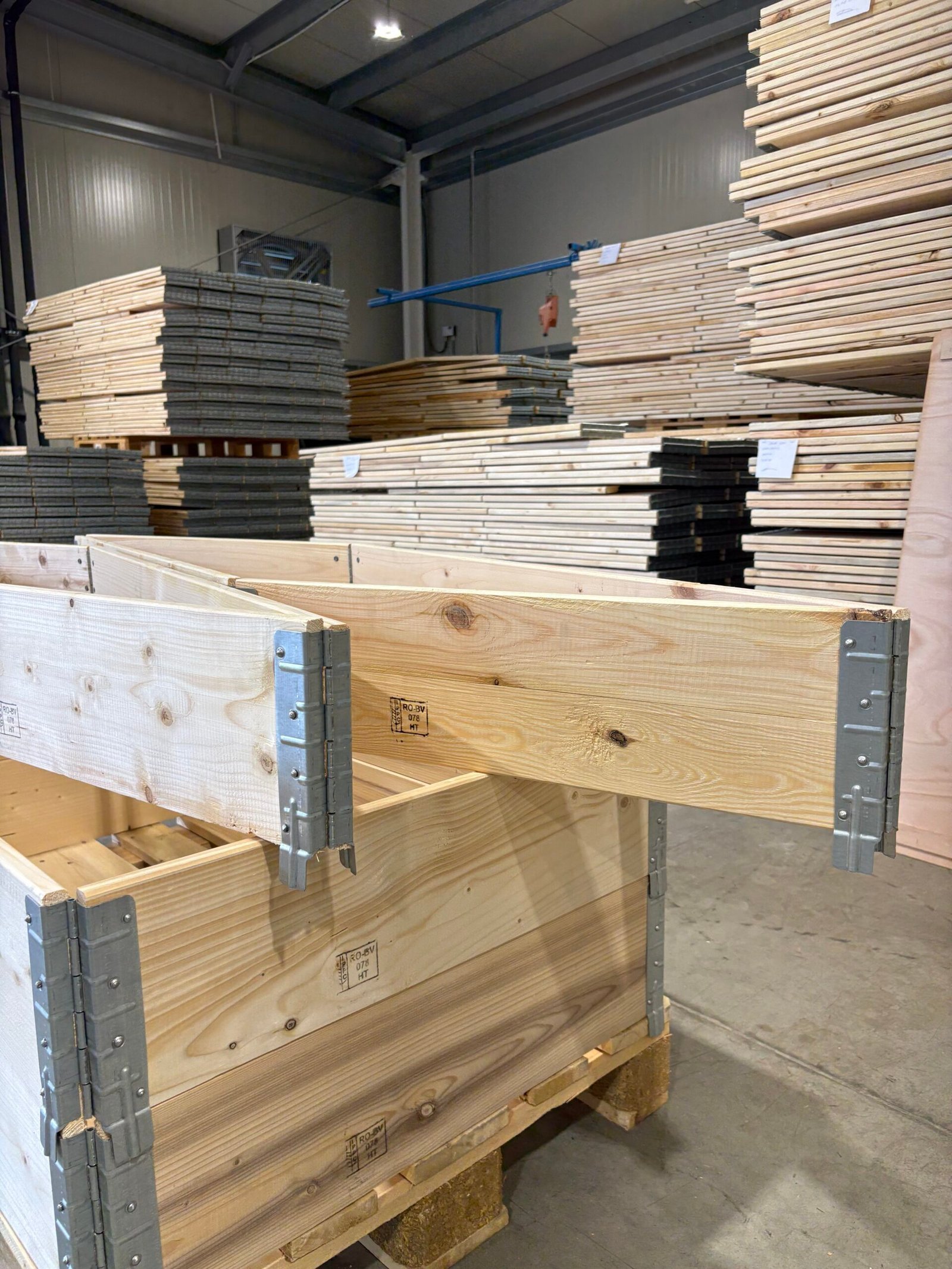
From Order to Airlift in 48 Hours: ISPM 15 Certified Wooden Pallet Collars for Military Defence Logistics
August 27, 2026
- Insights
- Austria, Bahrain, Bulgaria, Denmark, Germany, Hungary, Kuwait, Moldova, Oman, Poland, Romania, Saudi Arabia, South Africa, United Arab Emirates
- Defence
- Industry solutions
Would you like to know more details?
Fill in the form or ask the chatbot to establish the contact with us



 English
 Germany
 Hungary
 Poland
 Romania