
Packaging Irregular Aerostructures for Military Transport Aircraft: A Custom Wooden Crating Case Study
Packaging Irregular Aerostructures for Military Transport Aircraft: A Custom Wooden Crating Case Study
- Insights
- Austria, Bahrain, Bulgaria, Denmark, Germany, Hungary, Kuwait, Moldova, Oman, Poland, Romania, Saudi Arabia, South Africa, United Arab Emirates
- Defence
- Industry solutions
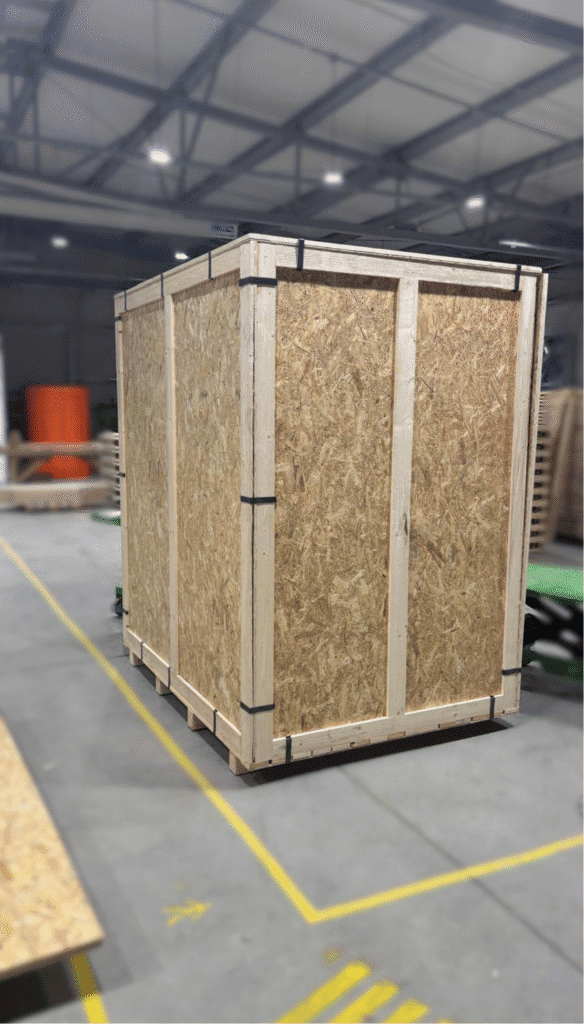
Custom wooden packaging for high-value aerostructures requires more than standard crating. This case study examines how bespoke wooden boxes were engineered and delivered on demand to protect C-130 Hercules components — including wings, cockpits, and cabin structures — throughout a Just-In-Time aerospace supply chain.
Standard Packaging Cannot Protect Aerostructures
Aerostructures such as aircraft wings, cockpits, and cabin sections present a combination of characteristics that standard packaging formats are not designed to handle:
- Highly irregular geometries that do not conform to standard box dimensions
- Fragile outer surfaces vulnerable to point-loads and surface contact damage
- Sensitive weight distributions requiring precise load-bearing support
- Oversized dimensions that exceed standard handling and transport envelopes
For a historical facility responsible for the production and maintenance of C-130 Hercules military transport aircraft, these characteristics meant that off-the-shelf packaging solutions posed a direct risk to component integrity during transit.
What the Engineering Solution Required
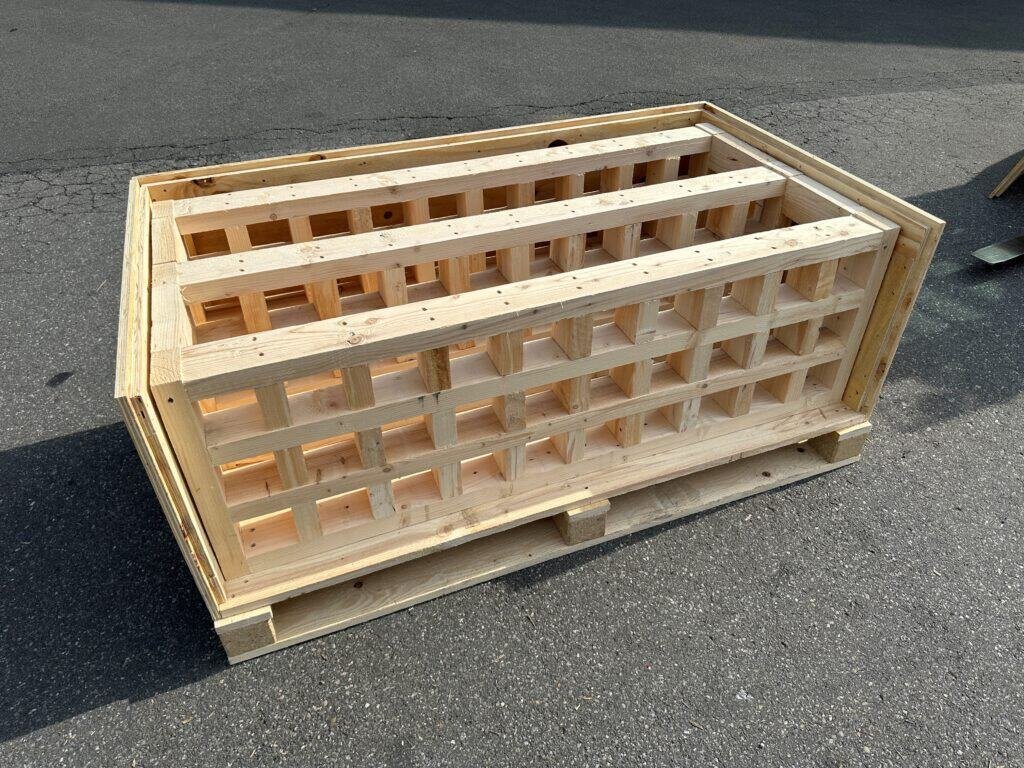
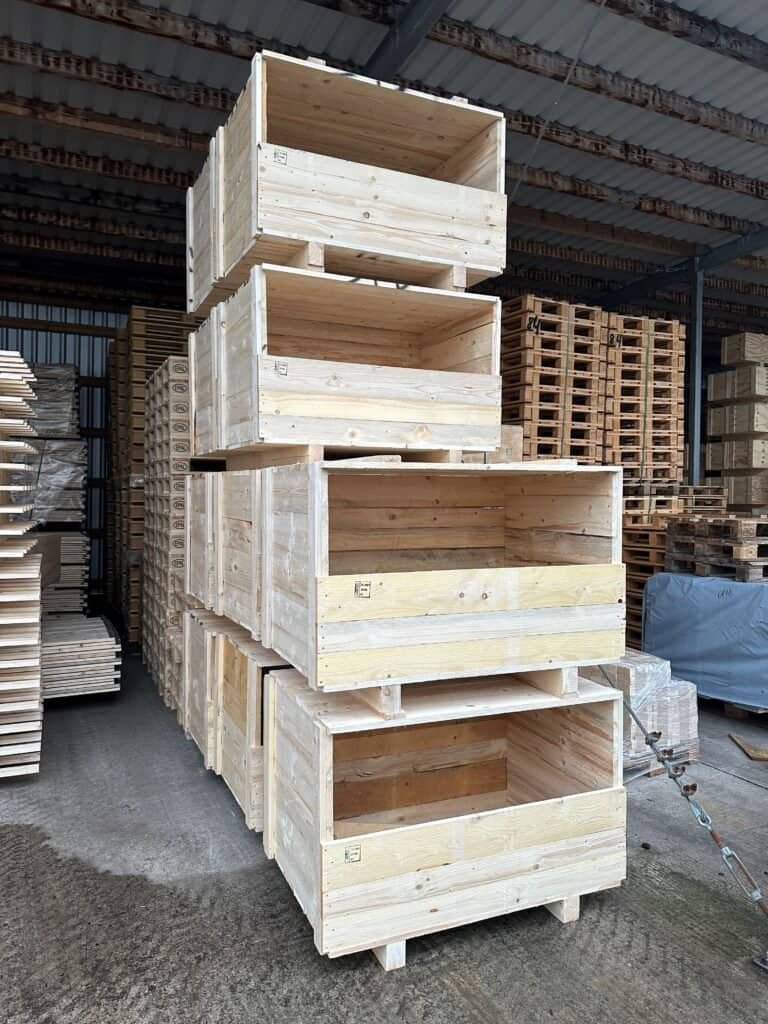
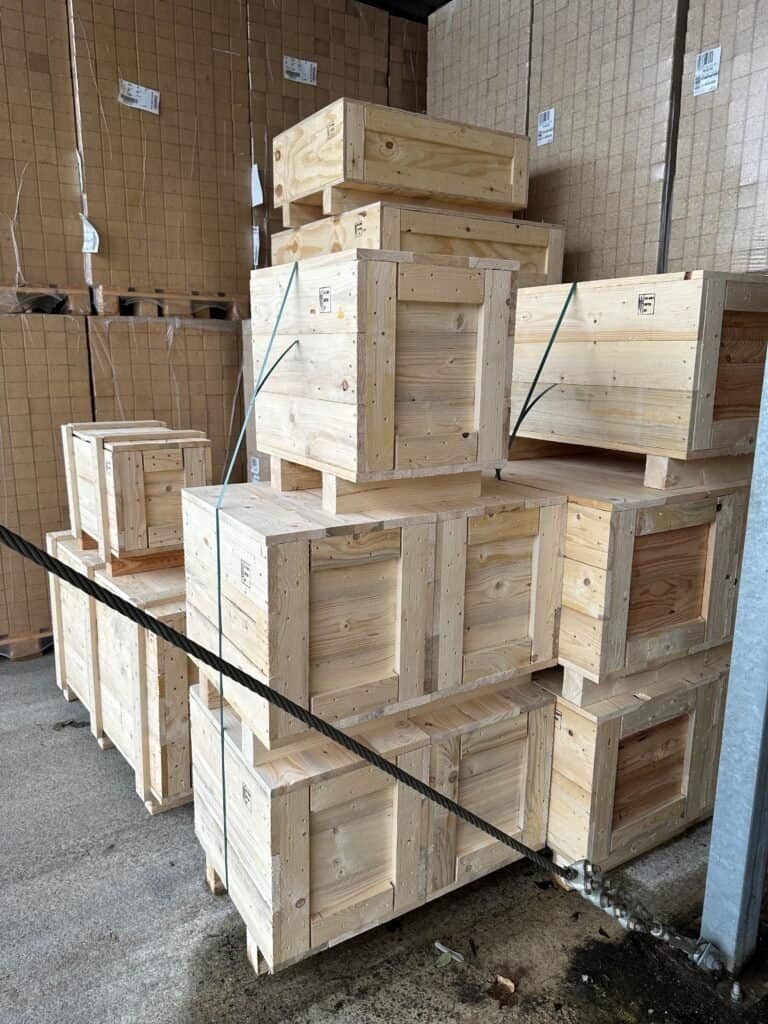
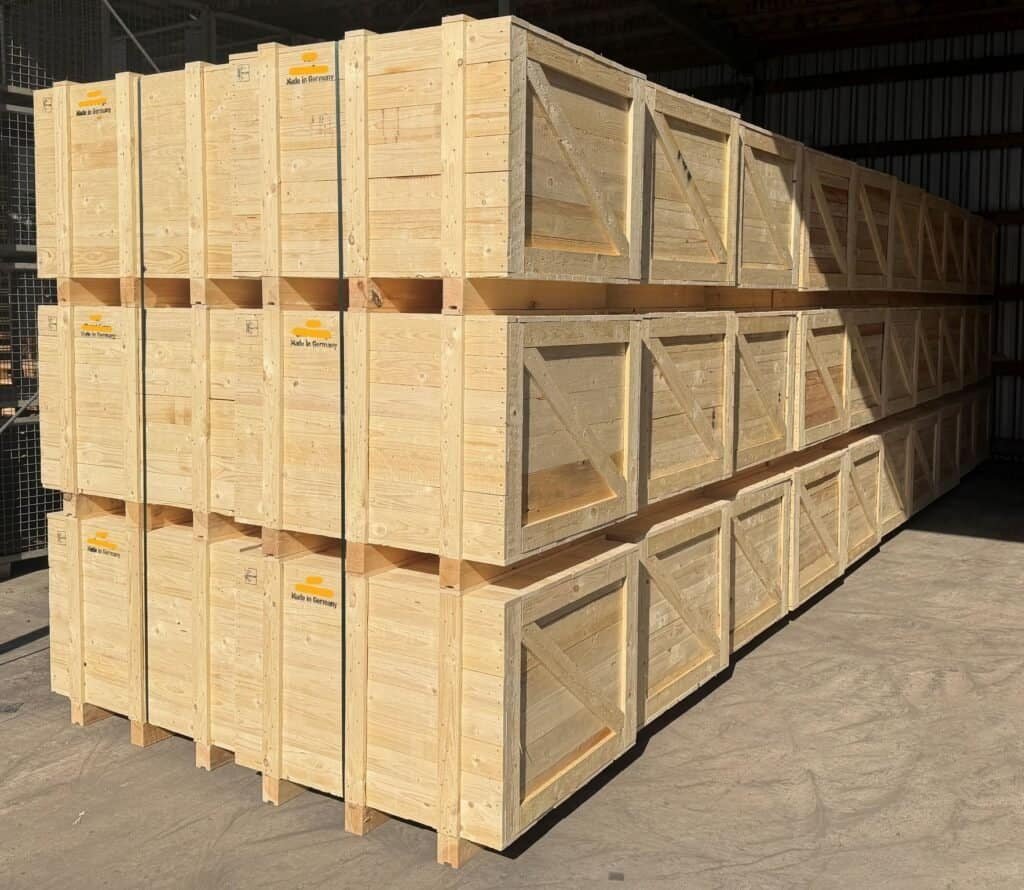
The packaging solution developed for this deployment was a system of custom-made wooden boxes, each engineered to the precise technical specifications of the individual component it was designed to protect.
Key engineering elements included:
Bespoke Internal Cradles — Each box was fitted with internally engineered cradles designed to fully suspend the component, eliminating contact between the structure and the box walls and preventing point-load stress at any stage of transit.
Shock Isolation — The heavy-duty wooden system was configured to absorb vibration and prevent structural twisting throughout the supply chain, from facility dispatch to the final destination.
ISPM 15 Certified Timber — All timber used in the custom boxes was heat-treated and certified under ISPM 15, meeting international phytosanitary requirements for cross-border military logistics.
Component-Specific Design — No two aerostructures share identical geometry. Each box was manufactured to a pre-engineered blueprint specific to that component, ensuring complete protection regardless of the complexity of the structure.
How Just-In-Time Delivery Was Integrated into the Manufacturing Process
Aerospace component manufacturing operates under strict Just-In-Time and Just-In-Sequence scheduling. Wings, cabin sections, and cockpit structures occupy significant floor space — neither the aircraft manufacturer nor the packaging facility could hold completed boxes or finished components in long-term storage.
This created a dual constraint: packaging had to be ready precisely when the component was ready, with no buffer for delays in either direction.
The solution was built around pre-engineering:
- Blueprints for each custom box size were developed and approved in advance
- A safety stock of ISPM 15 heat-treated timber and heavy-duty hardware was always maintained
- When a call-off was received, the production team built, quality-checked, and delivered the custom box directly to the assembly line within hours
This approach eliminated the lead time that would otherwise be required for bespoke fabrication, allowing the packaging operation to synchronize precisely with the client’s production schedule without compromising build quality or structural integrity.
What the Results Demonstrated
Components including oversized wings and complex cabin structures were dispatched fully suspended, shock-isolated, and free from point-load damage throughout transit. The on-demand manufacturing model consistently met assembly line call-offs within the required window, supporting uninterrupted JIT and JIS production schedules.
The deployment established a repeatable model for aerostructure packaging in high-tempo aerospace and defence environments — one where bespoke engineering and rapid manufacturing capacity operate in parallel rather than in sequence.
Several considerations emerge for facilities procuring packaging for aerostructure logistics:
- Standard packaging is not a viable option for irregular, high-value aerostructures. The geometry, surface fragility, and weight distribution of components such as wings and cabin sections require engineering-led solutions.
- Pre-engineered blueprints and maintained material stock eliminate fabrication lead time. In JIT environments, the packaging supply chain must be as responsive as the production supply chain itself.
- Bespoke wooden crating is a proven solution for oversized, fragile aerospace components. When correctly engineered, timber systems provide structural rigidity, shock isolation, and compliance credentials required for military aerospace logistics.
Working with complex aerostructures or time-critical military logistics requirements?
Related publication

PPWR: what it means for your packaging supply chain
September 3, 2026
- Insights
- Austria, Bulgaria, Denmark, Germany, Hungary, Poland, Romania
- Business, Industry solutions, Sustainability
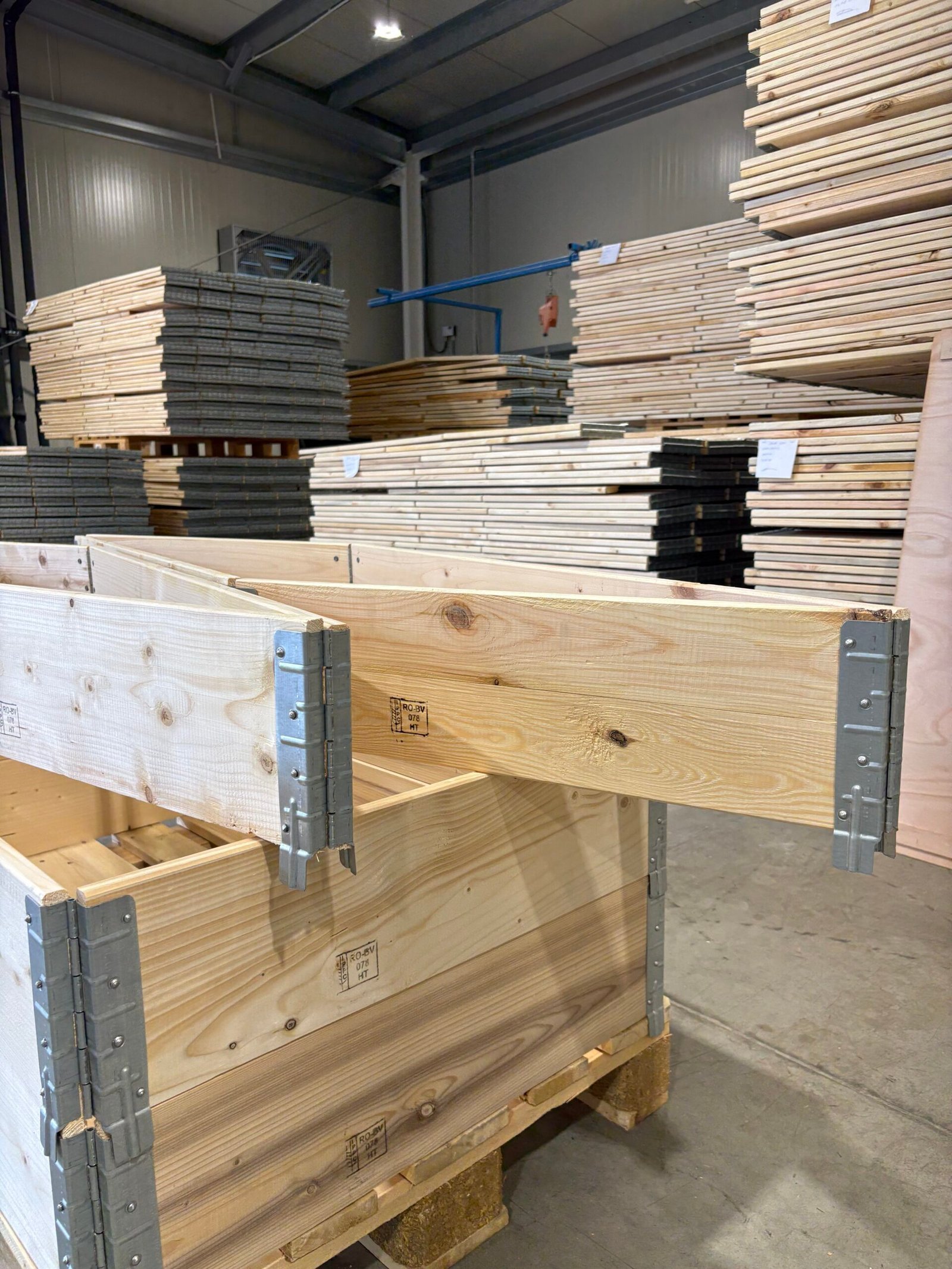
From Order to Airlift in 48 Hours: ISPM 15 Certified Wooden Pallet Collars for Military Defence Logistics
August 27, 2026
- Insights
- Austria, Bahrain, Bulgaria, Denmark, Germany, Hungary, Kuwait, Moldova, Oman, Poland, Romania, Saudi Arabia, South Africa, United Arab Emirates
- Defence
- Industry solutions
Would you like to know more details?
Fill in the form or ask the chatbot to establish the contact with us



 English
 Germany
 Hungary
 Poland
 Romania