
PPWR: what it means for your packaging supply chain
- Insights
- Austria, Bulgaria, Denmark, Germany, Hungary, Poland, Romania
- Business, Industry solutions, Sustainability
Since 12 August 2026, the EU Packaging and Packaging Waste Regulation (PPWR, Regulation (EU) 2025/40) has applied directly across all 27 member states, replacing the packaging directive that governed the market for three decades Unlike the directive, a regulation doesn’t need national transposition — the same rules on recyclability, reuse, and traceability apply identically from Poland to Portugal from day one.
Here is what changes for our clients, what stays with us, and what we have already put in place.
The Declaration of Conformity is attached to your invoice
Since 12 August 2026, every EU invoice we issue has the Declaration of Conformity (DoC) attached for the product category you bought — wood, metal, cardboard, or plastic. In short, PalletBiz’s DoC is official, standards-referenced proof that a given material/product family meets its PPWR obligations – so our clients can drop it straight into their own compliance file without having to build the case themselves.
Who's responsible for what
This is the part most coverage gets muddled, so it is worth being precise.
We are responsible for the packaging itself. As the manufacturer placing transport packaging on the EU market, we carry the obligations on restricted substances, recyclability, reuse design and documentation as, for example before mentioned DoC.
You are responsible for your own operations. That means registering with and contributing to EPR schemes in each country where you place packaging on the market, meeting the reuse rates that apply to your transport packaging from 2030, and keeping supplier documentation like ours in your compliance file.
In short: you should not have to prove our packaging is compliant. That is our job, and the paperwork now arrives without you asking.
What's still ahead
PPWR isn’t a single deadline — most of the substantial requirements land in 2030, not now. Here’s the timeline that matters for transport packaging:
- 11 February 2025 — Entered into force; criteria for reusable packaging began to apply
- 12 August 2026 — Now in force across the EU; Declarations of Conformity required
- 12 August 2028 (earliest) — Harmonised labelling begins; transport packaging is exempt from consumer waste-sorting labels
- 1 January 2030 — The main cluster: design-for-recycling grades, packaging minimisation, a 50% empty-space limit, and 40% reuse for transport packaging. Packaging moving between business sites must generally be reusable, with pallet wrapping films and straps exempt
- 1 January 2035 — Packaging must be recyclable at scale through established infrastructure
- 1 January 2038 — Packaging must reach recyclability grade A or B
- 1 January 2040 — Higher recycled-content thresholds; 70% transport reuse as an indicative goal
Much of the fine detail still depends on EU guidance not yet published, particularly on recyclability grading and labelling. We’ll update our documentation as it lands.
What we have in place today
- Declarations of Conformity for each product group — wood, metal, cardboard, plastic — attached to every EU invoice as standard
- A PPWR Product Compliance Statement covering material composition, recyclability, substance restrictions and reuse, for customers who need more than the declaration
- Supplier declarations for traded products, so packaging we source rather than manufacture is documented too
Moreover, we have published three consecutive Annual Sustainability Reports voluntary, even though our franchise network sits outside frameworks like the CSRD.
What we're still building
We’d rather tell you this than let you assume it’s finished. We still working on:
- Wood origin and legality declarations across our supplier base, ahead of EUDR applying at the end of this year.
- Confirming EPR registration status across every country where we operate.
- Recycled-content data for plastic products — the one area where PPWR sets binding thresholds from 2030.
Solid wood and steel are among the most recyclable packaging materials
Our core range came out of this well, largely because it was built this way long before the regulation had a name. Solid wood and steel are among the most recyclable packaging materials under any EU framework, with established recycling flows across our markets. Our standard pallets and collars are designed for multiple trips, and our repair, sorting and buyback services extend product life rather than ending it.
The 2030 reuse targets are worth planning for now. If you move goods between your own sites, that’s where reusable formats will matter most — worth a conversation well before the deadline.
Get in touch
Want to talk through what PPWR means for your specific product range, or have an audit or tender coming up? Your account manager is a good place to start. You can also reach us directly at sustainability@palletbiz.com.
Related publication
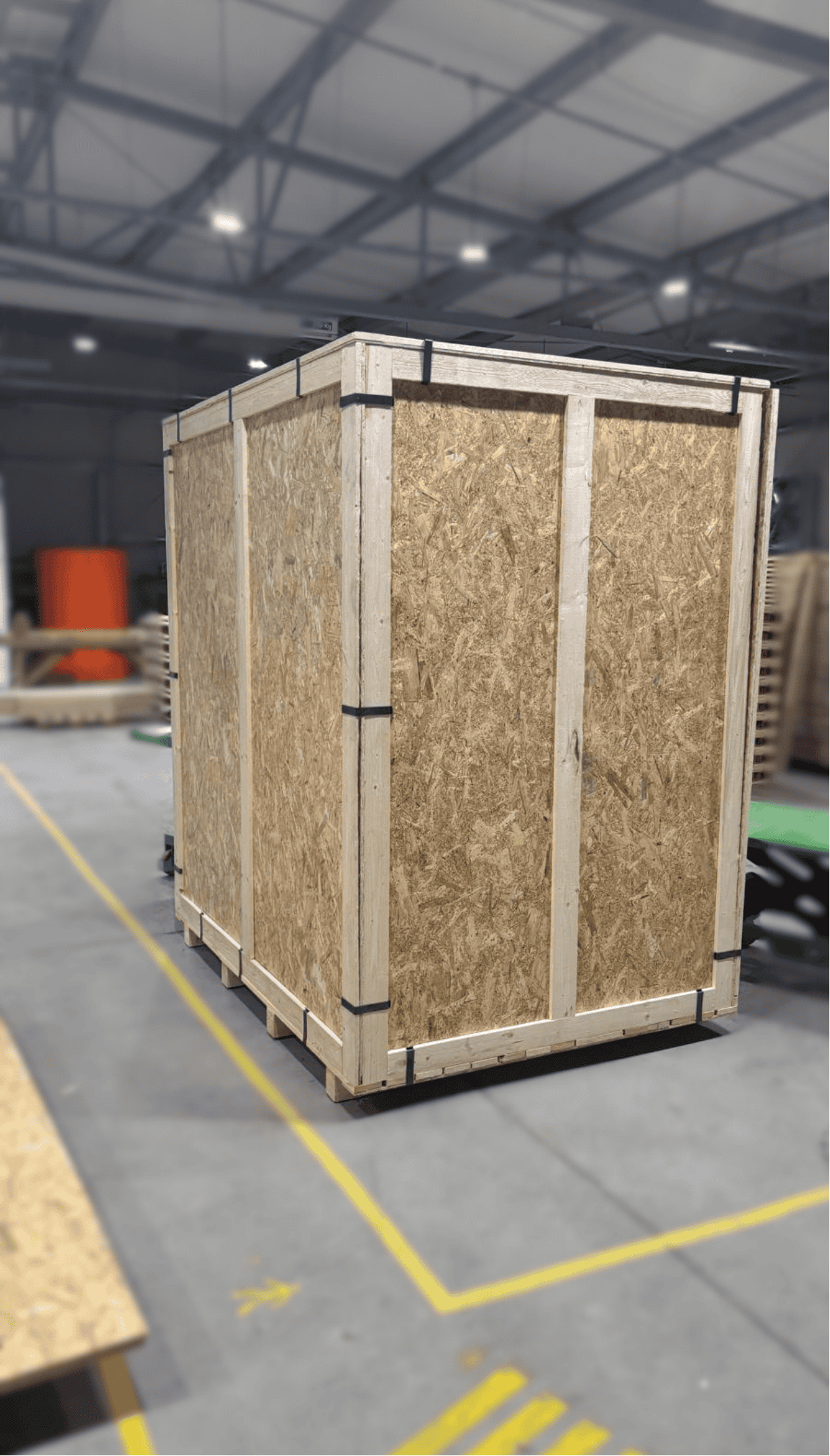
Packaging Irregular Aerostructures for Military Transport Aircraft: A Custom Wooden Crating Case Study
September 23, 2026
- Insights
- Austria, Bahrain, Bulgaria, Denmark, Germany, Hungary, Kuwait, Moldova, Oman, Poland, Romania, Saudi Arabia, South Africa, United Arab Emirates
- Defence
- Industry solutions
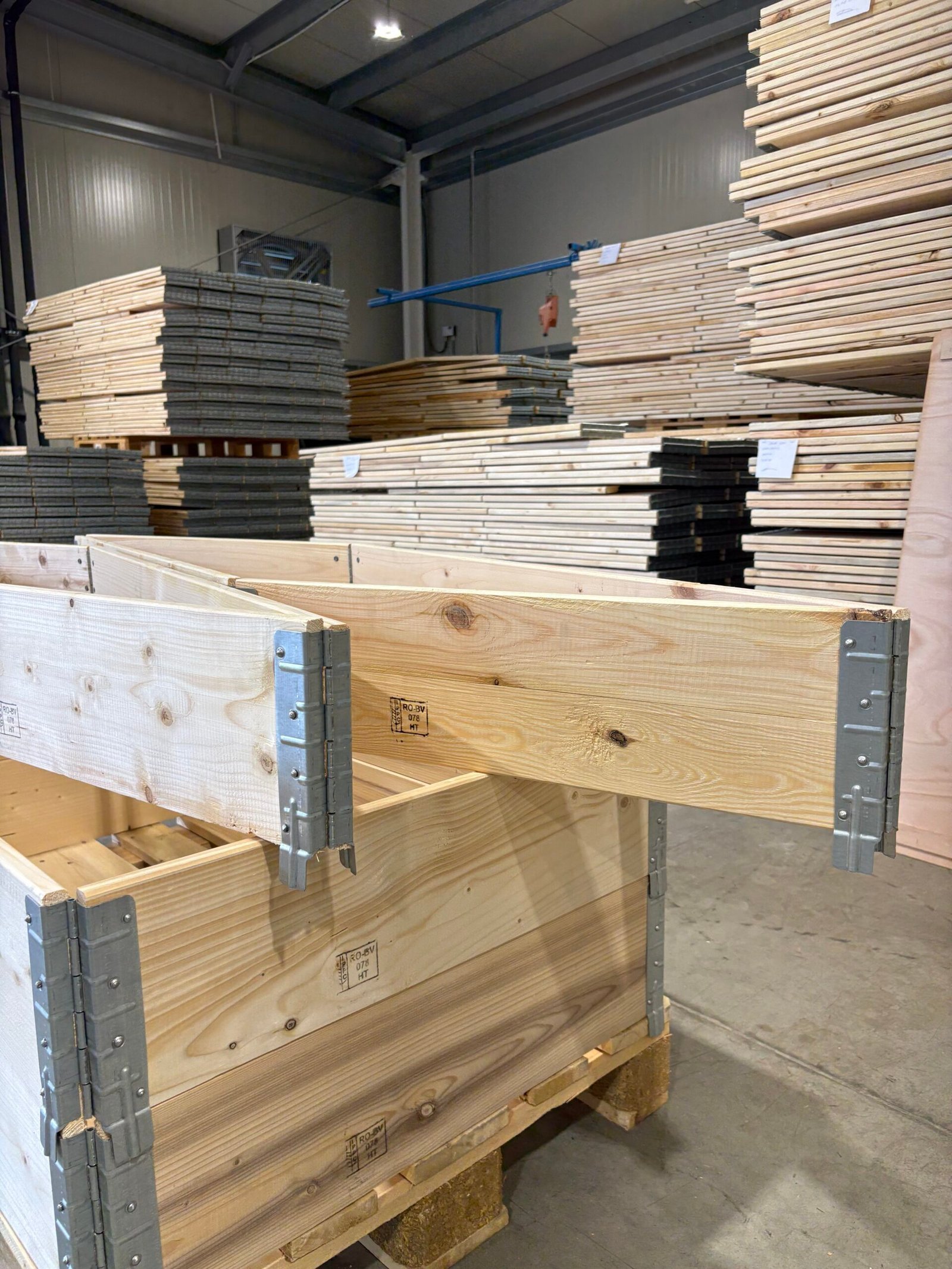
From Order to Airlift in 48 Hours: ISPM 15 Certified Wooden Pallet Collars for Military Defence Logistics
August 27, 2026
- Insights
- Austria, Bahrain, Bulgaria, Denmark, Germany, Hungary, Kuwait, Moldova, Oman, Poland, Romania, Saudi Arabia, South Africa, United Arab Emirates
- Defence
- Industry solutions
Would you like to know more details?
Fill in the form or ask the chatbot to establish the contact with us



 English
 Germany
 Hungary
 Poland
 Romania