
Legal Requirements for Defence Packaging
- Insights
- Austria, Bahrain, Bulgaria, Denmark, Germany, Hungary, Kuwait, Moldova, Oman, Poland, Romania, Saudi Arabia, South Africa, United Arab Emirates
- Defence
- Industry solutions
Defence packaging is subject to a layered set of national standards, alliance agreements and international trade rules — each with real contractual or regulatory weight. For procurement officers and logistics managers, knowing this landscape is not just useful background. It is the basis on which supplier decisions get made.
NATO: STANAG 4280
The North Atlantic Treaty Organization harmonises packaging requirements across member states through Standardization Agreements (STANAGs). For packaging and preservation, the primary standard is STANAG 4280 (also documented as APP-21), which defines four levels of packaging based on climate conditions, mechanical stress, storage duration and transport modes
Where PalletBiz stands:
PalletBiz manufactures in five NATO and EU member states — Romania, Germany, Hungary, Austria and Poland. We build wooden packaging to STANAG 4280 and NATO marking conventions, with third-party test validation available where a contract requires compliance.
The NSPA and eProcurement registration
The NATO Support and Procurement Agency (NSPA), headquartered in Luxembourg, is the alliance’s principal logistics and procurement body — and its scale is growing fast.
To be considered for NSPA business, a supplier must register in the NSPA via the NSPA eProcurement portal (eportal.nspa.nato.int). Registration is mandatory to be invited to bid on tenders; the portal also provides access to Future Business Opportunities (FBOs). Registration is free, and eligibility is generally limited to firms legally resident in NATO member nations.
Since PalletBiz entities are registered in NATO member states, we are eligible for registration. Therefore, our Corporate Group entity – have been registered at NSPA from 2025.
US military standards: MIL-SPEC in brief
The individual MIL-SPEC standards — MIL-STD-2073, MIL-DTL-2427, MIL-C-104/ASTM D7478, MIL-STD-1660, MIL-STD-129 — are US Department of Defense standards governing how military goods are preserved, crated, palletised and marked, which we explored in detail in our previous article. They are enforced through US-domestic contracting, with suppliers subject to Government QAR inspection.
PalletBiz does not manufacture in the United States and is not a domestic US DoD supplier. For NATO-aligned programmes and Gulf defence clients who reference MIL-SPEC construction requirements, we build to those specification patterns — but outside the US domestic procurement chain.
UK standards: DEF STAN 81-41 and MPAS
The UK Ministry of Defence specifies packaging through DEF STAN 81-41 (Packaging of Defence Materiel) — a six-part standard covering design, environmental testing, documentation, production processes and markings, with three preservation levels:
J (any climate, two-year protection), N (clean and dry, five-year) and P (normal conditions, five-year).
Wooden crates and cases up to 10,000 kg fall under DEF STAN 81-003.
Suppliers delivering military-level packaging to the MoD must hold MPAS (Military Packager Accreditation Scheme) accreditation, operational since July 2012. Pre-qualification also typically involves registration on JOSCAR, with DEFCON contract clauses flowing packaging requirements to subcontractors and manufacturers.
Where PalletBiz stands:
PalletBiz does not currently hold MPAS accreditation and is not a UK MoD domestic packaging supplier. Our role in relation to UK defence activity is as a potential partner for multinational NATO programmes procured through NSPA or for export shipments to allied nations. If business development in the UK market justifies it, MPAS accreditation is the appropriate next step. Until then, our positioning is honest: we are not a UK domestic packaging supplier.
ISPM-15: the rule that always applies
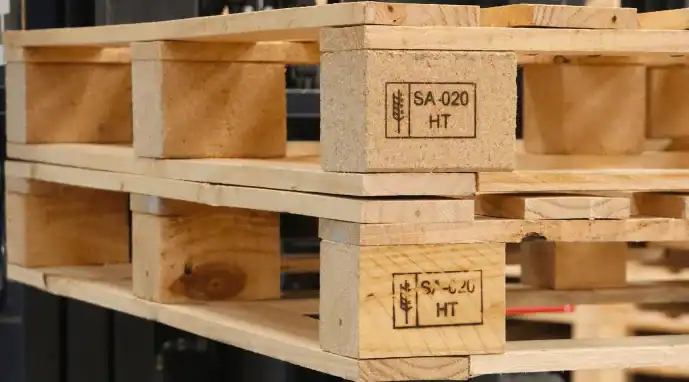
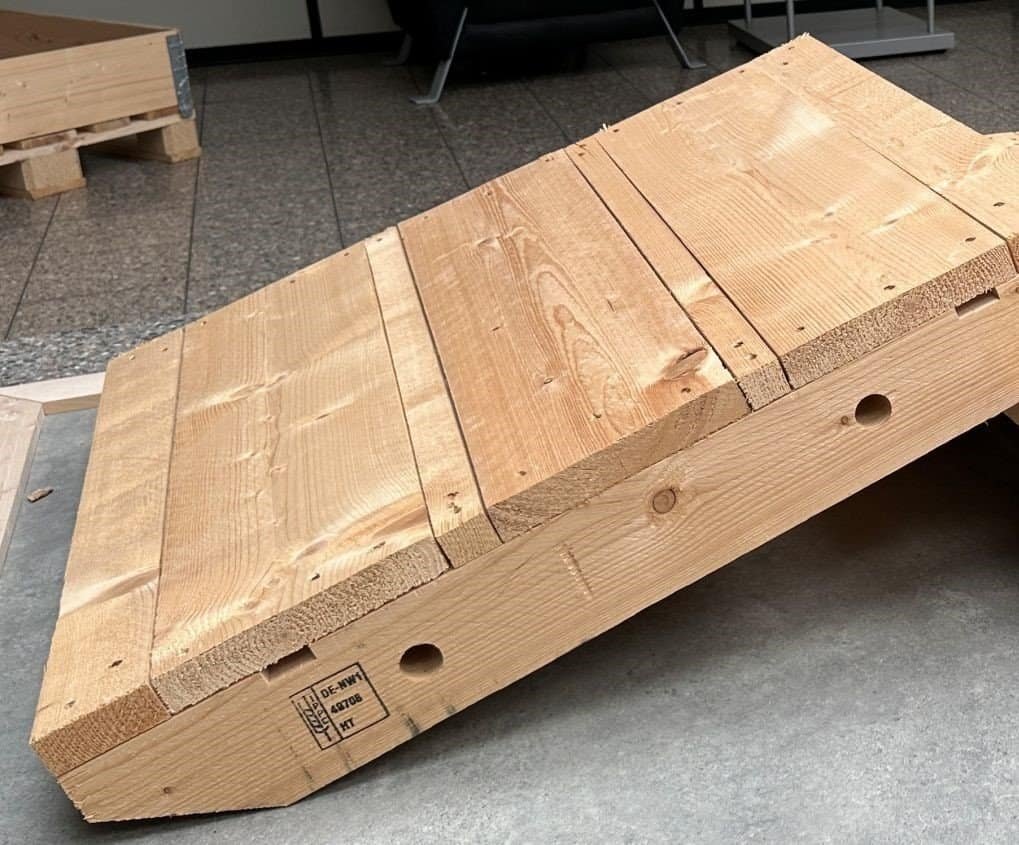
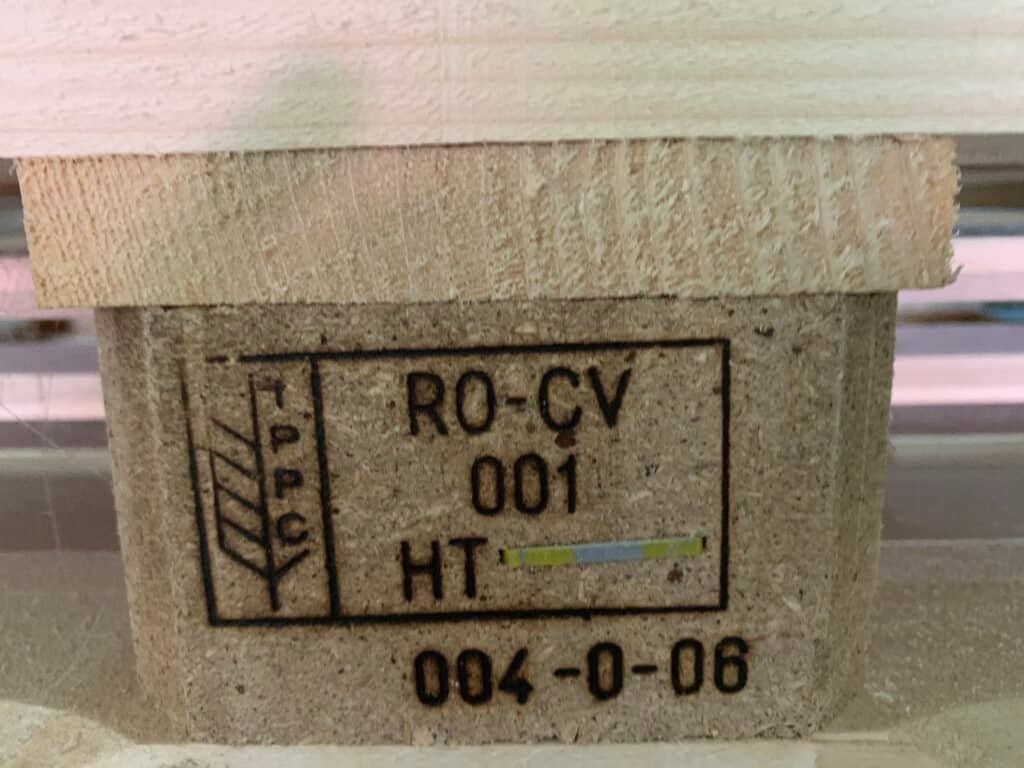
Whatever the applicable defence standard, one international rule applies to virtually every wooden package crossing a border: ISPM-15, the International Standards for Phytosanitary Measures No. 15, developed under the UN’s International Plant Protection Convention (IPPC).
ISPM-15 requires all solid wood packaging over 6mm — pallets, crates, boxes, dunnage — to be debarked and heat-treated to a core of 56°C for at least 30 minutes, then stamped with the IPPC mark. Enforcement covers 80-plus countries. For defence cargo that crosses borders constantly and under operational pressure, non-compliant wood packaging risks quarantine, fumigation costs, or destruction at the port of arrival.
Where PalletBiz stands
— a genuine strength: PalletBiz holds IPPC/ISPM-15 heat-treatment licences and delivers compliant export packaging. For Gulf-based defence programmes where equipment regularly transits multiple borders, and for European primes shipping to overseas markets, this is a direct operational capability — not a checkbox.

ISO and GMP: the quality foundation
Defence buyers expect baseline quality credentials. ISO 9001 (Quality Management) and ISO 14001 (Environmental Management) are the standard expectations.
Where PalletBiz stands:
PalletBiz holds ISO 9001 and ISO 14001 across all entities with production sites, and GMP compliance certificates in Bahrain and Saudi Arabia — covering the clean, documented and auditable production discipline that defence-sensitive work demands. FSC® Chain of Custody certification and EPAL production licences (Romania) round out the picture.
Read more about Our Certifications
The overall picture
For NATO-aligned primes, Gulf defence programmes and cross-border export shipments, PalletBiz brings the right footprint — the right certifications, and the manufacturing capability to deliver custom, heavy-duty solutions on time.
Related publication
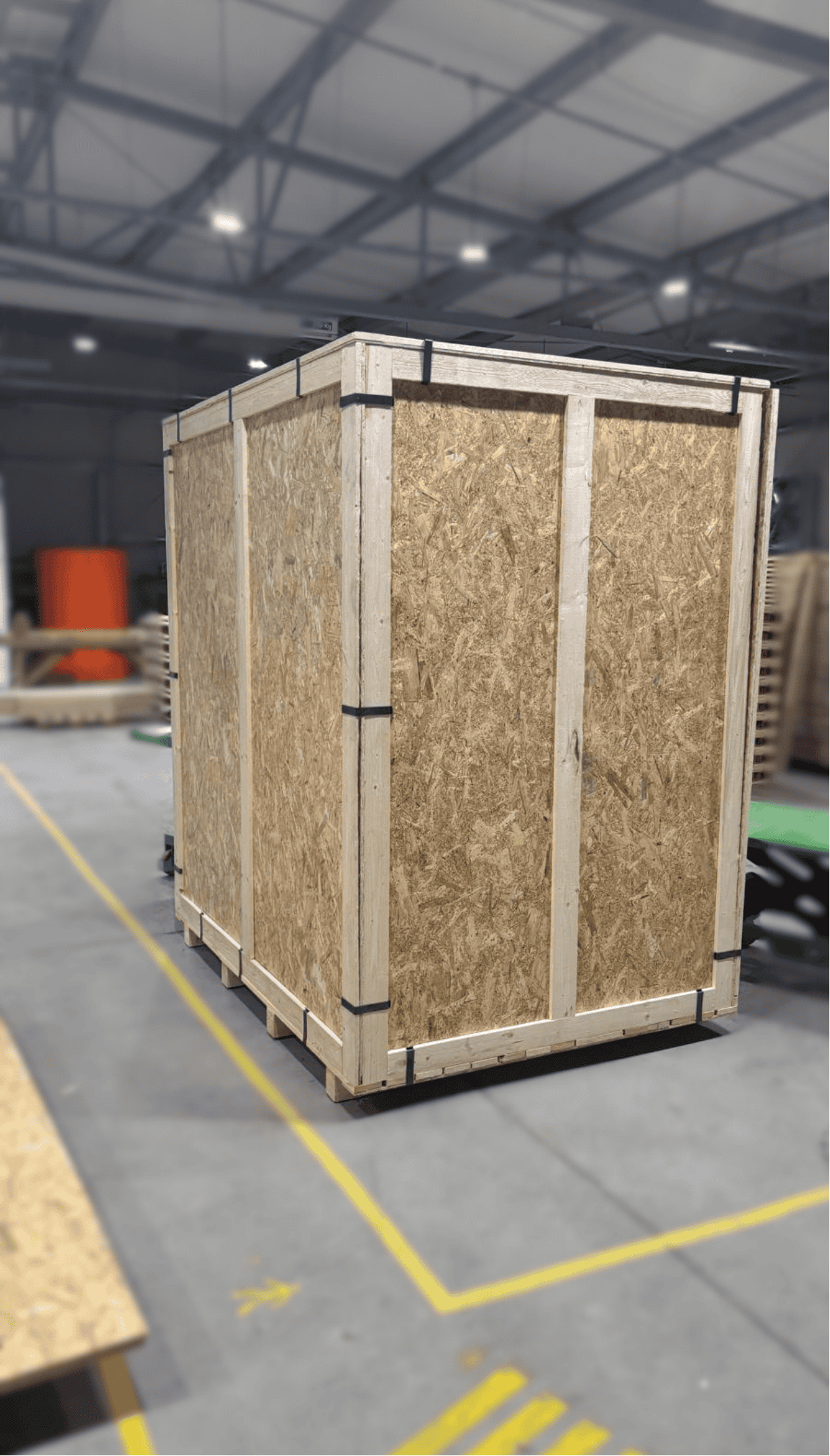
Packaging Irregular Aerostructures for Military Transport Aircraft: A Custom Wooden Crating Case Study
September 23, 2026
- Insights
- Austria, Bahrain, Bulgaria, Denmark, Germany, Hungary, Kuwait, Moldova, Oman, Poland, Romania, Saudi Arabia, South Africa, United Arab Emirates
- Defence
- Industry solutions

PPWR: what it means for your packaging supply chain
September 3, 2026
- Insights
- Austria, Bulgaria, Denmark, Germany, Hungary, Poland, Romania
- Business, Industry solutions, Sustainability
Would you like to know more details?
Fill in the form or ask the chatbot to establish the contact with us



 English
 Germany
 Hungary
 Poland
 Romania